

Video Annotation Services
Accurate and Compliant Labeled Data Pipelines Designed to Handle Your Complex Taxonomies and High-Motion Datasets
- Managed video annotation outsourcing for high-volume, complex datasets
- Human-in-the-loop review for label drift, object ID switches, occlusion, and ambiguous frames
- Secure delivery in formats aligned with your AI/ML pipeline








Stop Frame-Level Inconsistencies from Degrading Your AI/ML Models
A video model is only as reliable as the continuity of its labels across frames. If a pedestrian is assigned a new ID after partial occlusion, a vehicle track breaks mid-sequence, or an action label starts a few frames late, the model learns inconsistent movement and corrupted event patterns. These errors can weaken object detection, tracking, and activity-recognition performance during training.
Our video annotation company handles these frame-level challenges across motion-heavy datasets. We pair automated pre-labeling with trained annotators to validate object tracks, event boundaries, and ambiguous frames before the dataset moves into training. Whether you are building surveillance systems, AR/VR interactions, or behavior-recognition models, the workflow is aligned with your taxonomy, preferred tool, delivery format, and project timeline.

Unbroken entity ID tracking across long, complex video sequences (occlusions, camera changes, etc.)

Transitions audited down to the exact millisecond to prevent noisy action recognition.

Integrate natively with your preferred video labeling stack (CVAT, Labelbox, V7, etc.),

Compliant with ISO 27001 & SOC 2, backed by NDAs & air-gapped data labeling environments.
Train Models to Understand True Motion Dynamics with Our Video Annotation Services
Video annotation is not just image labeling repeated across frames. A model must learn how objects move, disappear, reappear, interact, change position, and remain identifiable over time. Our video annotation services cover the techniques required to build temporally consistent training datasets for AI use cases such as object detection, tracking, segmentation, activity recognition, spatial perception, and scene understanding.

2D Bounding Box Annotation
We use 2D bounding boxes to label visible objects across video frames, ensuring stable ID assignment across multiple frames so the model learns how that object moves through the sequence, even when it changes position, overlaps with another object, or exits and re-enters the frame.

3D Cuboid Annotation
When a model needs to understand where an object is placed, how it is angled, and how it moves in a three-dimensional scene, we apply 3D cuboid annotation, labeling the depth, orientation, and spatial position of objects, ensuring your model can map spatial trajectories precisely.

Semantic Segmentation
Moving shadows, shifting light, or rapid camera panning can easily ruin pixel-level accuracy. We classify every pixel across changing scenes while keeping mask boundaries rigid from frame to frame, actively catching and correcting class bleed and boundary erosion before they mess up your training.

Instance Segmentation
To help your model distinguish individual objects that touch, overlap, or move close together in high-density crowds or traffic, we isolate each instance with its own precise mask and unique identity.

Keypoint & Skeleton Tracking
We map multi-point skeletal models and facial landmarks across fast-moving sequences, ensuring strict frame-to-frame stability for sports analytics, AR/VR, and behavior monitoring.

Polygon Annotation
When bounding boxes include too much background clutter, we use polygon annotation to trace complex geometries (such as dents on a vehicle body or overhanging tree branches encroaching on a roadway).

Polyline Annotation
For videos with changing camera perspectives, we use polyline annotation to deal with issues such as lens distortion and shifting vanishing points, caused by the angle of the camera relative to the ground changing constantly.

Temporal Event & Activity Labeling
Models need to understand what happens over time instead of just what is in a static frame. So, we mark the exact timestamp of complex multi-frame actions and behavioral triggers (such as object entry and exit time across frames).

3D Point Cloud & Sensor-Fusion Annotation
To help depth cameras and sensor-fusion systems accurately calculate distance, position, and geometry, we label spatial relationships and object trajectories inside raw LiDAR datasets, verifying that 3D point cloud labels mirror the 2D video feeds.
2D Bounding Box Annotation
We use 2D bounding boxes to label visible objects across video frames, ensuring stable ID assignment across multiple frames so the model learns how that object moves through the sequence, even when it changes position, overlaps with another object, or exits and re-enters the frame.
Instance Segmentation
To help your model distinguish individual objects that touch, overlap, or move close together in high-density crowds or traffic, we isolate each instance with its own precise mask and unique identity.
Polyline Annotation
For videos with changing camera perspectives, we use polyline annotation to deal with issues such as lens distortion and shifting vanishing points, caused by the angle of the camera relative to the ground changing constantly.
3D Cuboid Annotation
When a model needs to understand where an object is placed, how it is angled, and how it moves in a three-dimensional scene, we apply 3D cuboid annotation, labeling the depth, orientation, and spatial position of objects, ensuring your model can map spatial trajectories precisely.
Keypoint & Skeleton Tracking
We map multi-point skeletal models and facial landmarks across fast-moving sequences, ensuring strict frame-to-frame stability for sports analytics, AR/VR, and behavior monitoring.
Temporal Event & Activity Labeling
Models need to understand what happens over time instead of just what is in a static frame. So, we mark the exact timestamp of complex multi-frame actions and behavioral triggers (such as object entry and exit time across frames).
Semantic Segmentation
Moving shadows, shifting light, or rapid camera panning can easily ruin pixel-level accuracy. We classify every pixel across changing scenes while keeping mask boundaries rigid from frame to frame, actively catching and correcting class bleed and boundary erosion before they mess up your training.
Polygon Annotation
When bounding boxes include too much background clutter, we use polygon annotation to trace complex geometries (such as dents on a vehicle body or overhanging tree branches encroaching on a roadway).
3D Point Cloud & Sensor-Fusion Annotation
To help depth cameras and sensor-fusion systems accurately calculate distance, position, and geometry, we label spatial relationships and object trajectories inside raw LiDAR datasets, verifying that 3D point cloud labels mirror the 2D video feeds.
Eliminating Labeling Bottlenecks and Drift with a Transparent Video Annotation Workflow
Most video annotation issues begin with unclear class rules, weak tracking instructions, or review criteria that are agreed upon too late. A reliable video annotation company should define these decisions before production starts. Our workflow sets the rules upfront and includes a free sample so you can assess output quality before moving into full-scale production.
- 1
Requirement Analysis and Free Sample
We review your footage type, model objective, annotation technique, class definitions, object tracking rules, output format, and quality expectations. Then we annotate a free sample so you can assess the output against your own acceptance criteria, and we set the edge case handling instructions in collaboration.
- 2
Tool Setup & Video Annotation
We configure classes, attributes, and edge-case rules inside the chosen labeling tool. Footage is prepared, split where needed, and labeled using AI-assisted pre-labeling and interpolation, with manual annotation applied where motion, occlusion, precision, or context requires human judgment.
- 3
Review and Validation
Senior annotators and subject matter experts run quality checks across annotated batches. Automated checks identify obvious issues, while manual review verifies tracking continuity, class accuracy, segmentation quality, event labels, object ID stability, and edge-case decisions.
- 4
Delivery and Refinement
Annotated data is delivered securely in your required format or through your preferred annotation platform. If feedback or approved corrections are needed, we review the affected annotations and refine the output against the agreed specification.
Proven Video Annotation Support across Diverse AI Training Requirements
We partner with AI teams to transform chaotic, multi-frame footage into structured, deployment-ready training data. Explore how our video annotation services support diverse AI use cases, from drone surveillance to audience engagement prediction.
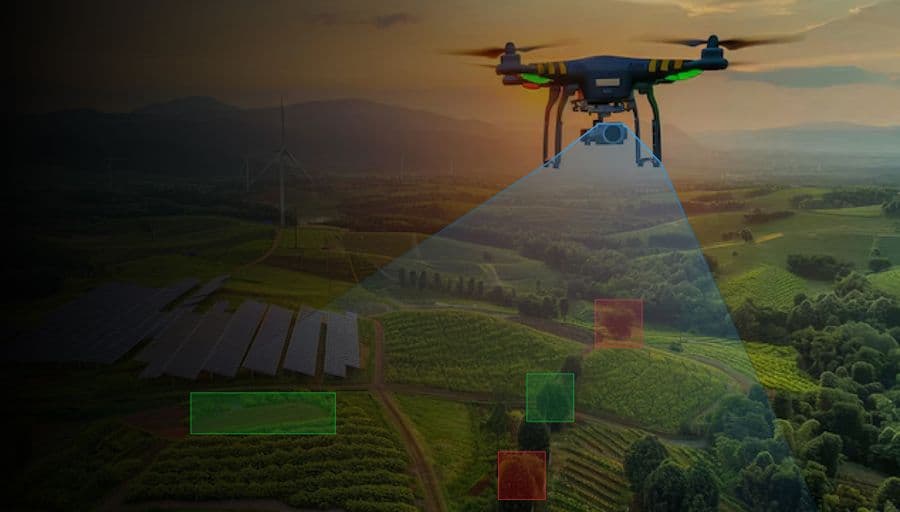
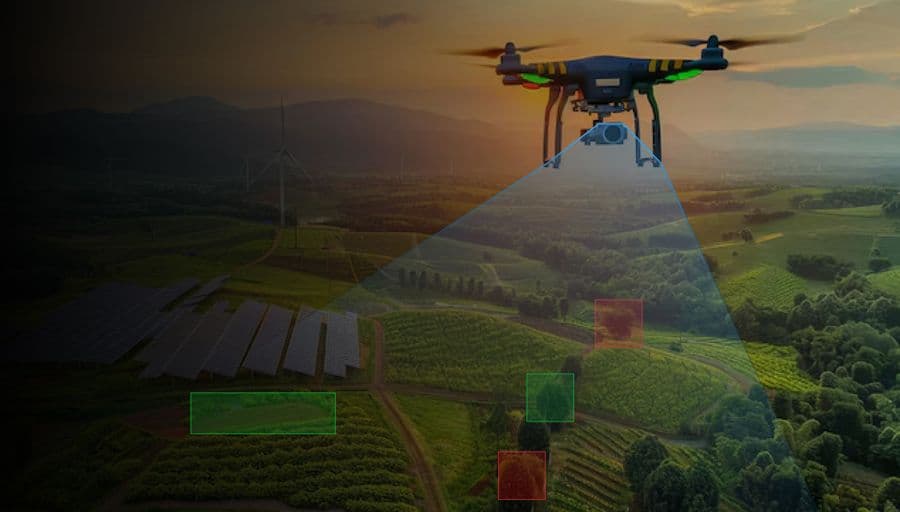
55+ Hours of Drone Video Annotated for Aerial Surveillance Model
A US aerial surveillance technology firm serving agriculture, construction, and real estate needed 55 hours of drone footage labeled to train object detection models. Varying thermal signatures, low-light night scenes, and unpredictable drone movement made automated tracking unreliable.
How we boosted object detection accuracy 30% and operational efficiency 20%

2,500+ Multilingual Videos and Scripts Labeled Monthly
An entertainment content analytics leader used ML to predict how viewers react to trailers, shows, and films. Labeling 80+ assets daily across English, Spanish, and German while preserving tone and nuance across genres like horror and sci-fi demanded specialized annotation expertise.
How we lifted labeling accuracy to 98–99% and boosted capacity 65%

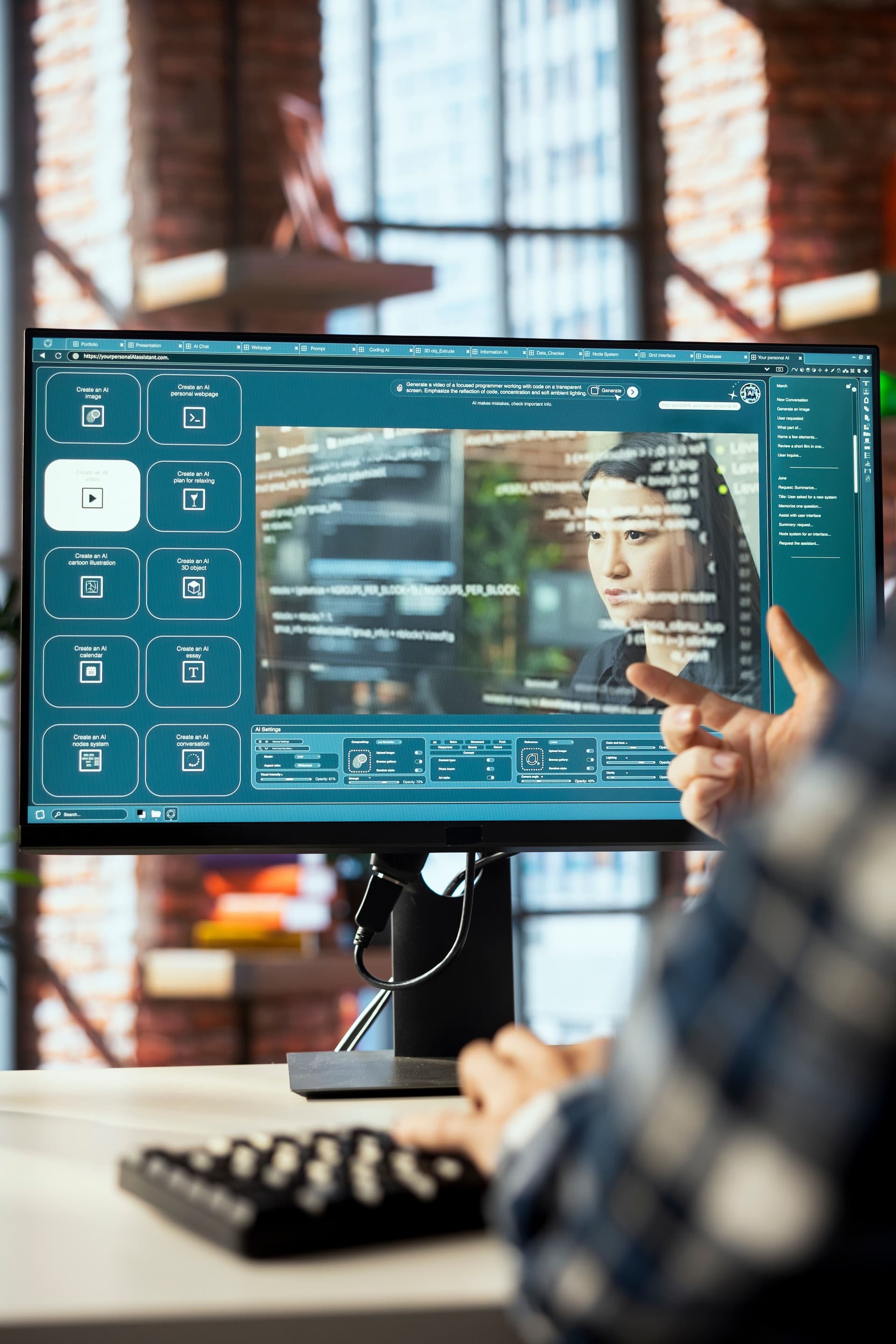
AI-Assisted Video Annotation with Human Review at Every Critical Frame
You need video datasets where object IDs, events, masks, and tracking decisions stay completely consistent from frame to frame. Automated labeling can't deliver that.
Video Annotation Support across Your Preferred Platforms—No Workflow Disruption
If your team already uses CVAT, Label Studio, V7 Darwin, or an in-house annotation platform, we can work within that environment—no disruptive tool migrations required. Our video labeling company maintains absolute consistency across your labels, QA checks, and final exports, all while working entirely within your preferred environment.






Video Annotation Solutions for Industry-Specific Model Training Problems
A person on a city sidewalk means entirely different things to different AI models. To an autonomous vehicle, that person is a dynamic obstacle requiring a 3D cuboid to track their velocity and head orientation. To a retail analytics model, they represent a dwell-time metric, where the annotator must label engagement signs (such as the person’s gaze duration toward the window display or a slowing pace). Because every sector defines motion, objects, events, risk, and context differently, we don't use generic schemas. We align your labeling taxonomy to the exact physics and goals of your industry, building datasets that teach your model to actually understand its environment—not just spot shapes.

IT and SaaS
Screen recordings, product walkthroughs, video calls, and user interaction clips are annotated for clicks, navigation paths, gestures, interface actions, workflow steps, errors, and user behavior patterns. These labels support software QA automation, UI/UX analysis, AI assistant training, workflow intelligence, video conferencing features, and product analytics.

Agriculture and Precision Farming
Drone footage, field videos, and livestock monitoring clips are annotated for crop condition, plant growth stages, pest presence, disease indicators, irrigation issues, livestock movement, terrain features, and field activity. These datasets support precision farming, crop monitoring, and yield-related AI models.
Autonomous Vehicles and ADAS
Road footage is annotated for pedestrians, vehicles, cyclists, signals, traffic signs, lane markings, potholes, obstacles, road edges, and traffic movement. These datasets support object detection, lane detection, object tracking, pedestrian intent analysis, obstacle recognition, sensor fusion, and ADAS model training for safer perception systems.

Robotics
Videos from robots, warehouse cameras, and controlled environments are labeled for object position, robot movement, human-robot interaction, handover sequences, collision risks, navigation paths, shelves, bins, and moving equipment. These datasets support robotic perception, autonomous mobile robots (AMR), robotic arm training, path planning, proximity detection, and warehouse automation.

eCommerce
Product unboxing videos, customer review clips, warehouse footage, and product interaction videos are annotated for product visibility, usage behavior, packaging condition, defects, sentiment cues, and fulfillment activity. These labels support visual search, virtual try-on, product recommendation, review analysis, warehouse automation, and product quality monitoring

Retail
In-store CCTV footage is labeled for shopper movement, shelf activity, product interaction, queue formation, staff-customer interaction, footfall patterns, and checkout behavior. These annotations support store heatmaps, shelf monitoring, loss prevention, customer behavior analytics, service quality analysis, and retail operations intelligence.

Manufacturing and Quality Control
Assembly-line footage is labeled for defects, components, machine activity, process deviations, worker movement, PPE usage, unsafe actions, and production events. These annotations support visual inspection, defect detection, workflow monitoring, safety compliance, predictive maintenance, and AI-based quality control.

Infrastructure Monitoring & Maintenance
Road, bridge, railway, power line, construction site, wind turbine, and solar panel videos are labeled for cracks, deformation, corrosion, missing parts, vegetation interference, structural damage, equipment movement, and safety violations. These datasets support inspection automation, predictive maintenance, construction monitoring, utility asset review, and infrastructure risk assessment.

Aviation and Ground Operations
Airport CCTV, tarmac footage, runway inspection videos, cockpit recordings, and drone monitoring clips are annotated for aircraft movement, ground crew activity, runway conditions, safety events, restricted-zone access, pilot behavior, and airspace intrusion. These datasets support aviation safety monitoring, ground operations analytics, runway assessment, drone detection, and fatigue-related AI models.

Energy, Oil, and Gas
Pipeline footage, facility surveillance, drone inspection videos, thermal videos, and offshore platform recordings are annotated for corrosion, cracks, leaks, equipment overheating, perimeter activity, PPE compliance, restricted-zone violations, and safety risks. These annotations support asset inspection, failure prediction, leak detection, operational safety, and remote monitoring.

Geospatial & Aerial
Drone videos, satellite sequences, aerial images, disaster-response videos, and environmental monitoring clips are annotated for land-use changes, vehicles, vessels, buildings, roads, vegetation, damage zones, construction activity, and environmental impact indicators. These labels support urban monitoring, traffic planning, livestock detection, disaster assessment, deforestation tracking, and geospatial AI models.

Customer Service and Support
Screen-share recordings, support calls with video, agent interaction clips, sign-language videos, and customer behavior recordings are annotated for workflow steps, issue type, sentiment cues, facial expressions, gestures, escalation moments, and resolution patterns. These datasets support automation, agent performance analysis, accessibility AI, empathy detection, and workflow optimization.

Finance
KYC videos, branch security footage, remote verification clips, and claim review videos are annotated for face visibility, document presentation, liveness cues, suspicious behavior, transaction context, and identity verification steps. These labels support fraud detection, remote onboarding, document authentication, branch surveillance, and insurance or loan-processing workflows.

Healthcare
Ultrasound videos, endoscopy footage, surgical videos, patient monitoring clips, and medical imaging sequences are labeled for abnormality detection, movement tracking, procedural analysis, anatomical structures, instrument visibility, and diagnostic-assist models. Healthcare video datasets are handled under HIPAA-compliant workflows where applicable.

Security and Surveillance
Surveillance footage is annotated for people, vehicles, objects, entry and exit events, crowd movement, restricted-zone activity, unattended objects, suspicious behavior, and incident sequences. These annotations support threat detection, perimeter monitoring, activity recognition, object tracking, false-positive reduction, and public safety analytics.

AR, VR, and Immersive Applications
Gestures, facial expressions, hand positions, body movement, pose changes, and interaction cues are annotated across video sequences. These labels help AR/VR systems understand motion, user intent, spatial interaction, gesture commands, body tracking, and real-time interaction behavior.

Media, Entertainment, and Content Platforms
Streaming content, trailers, shows, promotional videos, short-form clips, and user-generated videos are tagged by scene, action, topic, mood, sentiment, visual context, audience relevance, and brand-safety indicators. These annotations support recommendation engines, content discovery, content moderation, audience engagement prediction, personalization, and media intelligence.

Generative Video and Synthetic Media Evaluation
AI-generated videos, edited clips, synthetic media, and model-generated outputs are reviewed for visual consistency, realism, artifacts, frame-level errors, unsafe content, deepfake indicators, and preference quality. These annotations support generative AI evaluation, RLHF workflows, synthetic media detection, content safety review, and model output improvement.
Security & Compliance

ISO Certified

HIPAA Compliance

GDPR Adherence

Regular Security Audits

Encrypted Data Transmission

Secure Cloud Storage

Built for AI Teams and ML Engineers with Complex, Large-Scale Video Training Data Requirements
Is your team constantly auditing bounding boxes, fixing broken tracking paths, or managing annotator churn? Our video annotation company can absorb the operational heavy lifting. From setting up secure data transfers to maintaining rigid inter-annotator agreement standards with trained annotators, we serve as the managed execution layer that keeps your data moving from raw storage to the training pipeline without friction.
Enterprise Tech Teams
services for recurring video datasets, overflow capacity, new taxonomy pilots, and projects that require structured reporting or secure data handling. We help internal teams stay focused on model development while annotation work moves in parallel.
Research Institutions and AI Labs
Research video datasets need labels that follow defined protocols and remain reproducible during review. We follow documented guidelines, flag unclear cases, and maintain consistent annotation logic for experimental, academic, and benchmark-oriented datasets.
Product Companies Adding Video AI Features
Product teams may need video AI capabilities such as activity recognition, visual search, safety monitoring, gesture detection, sports tracking, or behavior analysis without turning their engineering team into an annotation team. We manage the video data labeling workflow so product and engineering teams can stay focused on feature development and release timelines.
Marketplaces and Content Platforms
Marketplaces, streaming platforms, media companies, and user-generated content platforms often need labeled video data for content discovery, moderation, recommendation, classification, and audience analysis. Our video tagging services help convert large volumes of platform footage into structured datasets for AI training and operational workflows.
End-to-End Data Annotation Services for AI Training
Many AI systems learn from more than video alone. Data-Entry-India also helps teams prepare text, image, and audio datasets that support computer vision, NLP, voice AI, and multimodal model development.

Build a Reliable Video Labeling Workflow for Your AI Model
A lack of training data shouldn't be the bottleneck holding back your AI production, despite having a large volume of raw video footage. Contact our team for a pilot (or a free sample) of video annotation services, aligned with your taxonomy requirements and security compliance needs. Let’s build the training data pipeline your AI projects need.