
How an Educational Publisher Built
a Scalable Workflow for Fixed Layout eBook Production


An Educational Content Company Serving Global Institutions
The client is an established educational publisher producing academic resources, curriculum materials, textbooks, and supporting learning content for schools, colleges, and higher education institutions worldwide. Its publishing portfolio spans print and digital formats, including eBooks, interactive editions, and digital learning resources distributed across multiple devices and reading environments.

Multi-Format eBook Production with High-Fidelity Layout Preservation
The educational publisher needed a reliable partner to convert about 7,000–10,000 pages each month into Read Aloud eBooks, Fixed Layout Kindle editions, and Fixed Layout ePub3 formats. The Fixed Layout eBook conversion workflow had to preserve the original print design and maintain consistent formatting across digital outputs.
The client required the production workflow to:
Preserve Original Page Design
Retain the layout, content positioning, and visual structure of the source publication across converted editions.
Maintain Formatting Consistency
Ensure fonts, images, tables, page elements, and overall formatting remained consistent across the required digital outputs.
Meet Publishing Timelines
Deliver completed titles within defined turnaround times to support the publisher's ongoing academic publishing cycles.
Managing Complex Educational Content without Compromising Accessibility and Delivery Schedules
Our team was assigned the task of managing high-volume Fixed Layout ePub3 production, complex page structures, and accessibility compliance simultaneously. Each title also had to remain faithful to the source design while functioning correctly in its intended reading environment.
Complex STEM Content
Many textbooks contained mathematical expressions, chemical structures, scientific notation, SVG illustrations, and layered instructional diagrams. Our team could not process these elements as standard text or images. We had to handle MathML structures, graphic relationships, labels, and visual hierarchies carefully because incorrect digital content conversion could alter the meaning of equations or scientific information.
Layout-Dependent Educational Material
The publisher's instructional books frequently combined body text, tables, images, callouts, sidebars, captions, and parallel content for teachers and students. For these publications, the position of an element often contributed directly to its meaning. The digital editions therefore required precise alignment, not simple extraction and reflow of source content.
Large Monthly Production Volumes
Managing thousands of pages within each production cycle required a workflow that could maintain consistency at scale. Even minor formatting issues could multiply across titles if they passed through the process unnoticed. The team therefore combined standardized workflows with specialist review for elements where automated processing alone could not ensure accuracy.
Accessibility Compliance at Scale
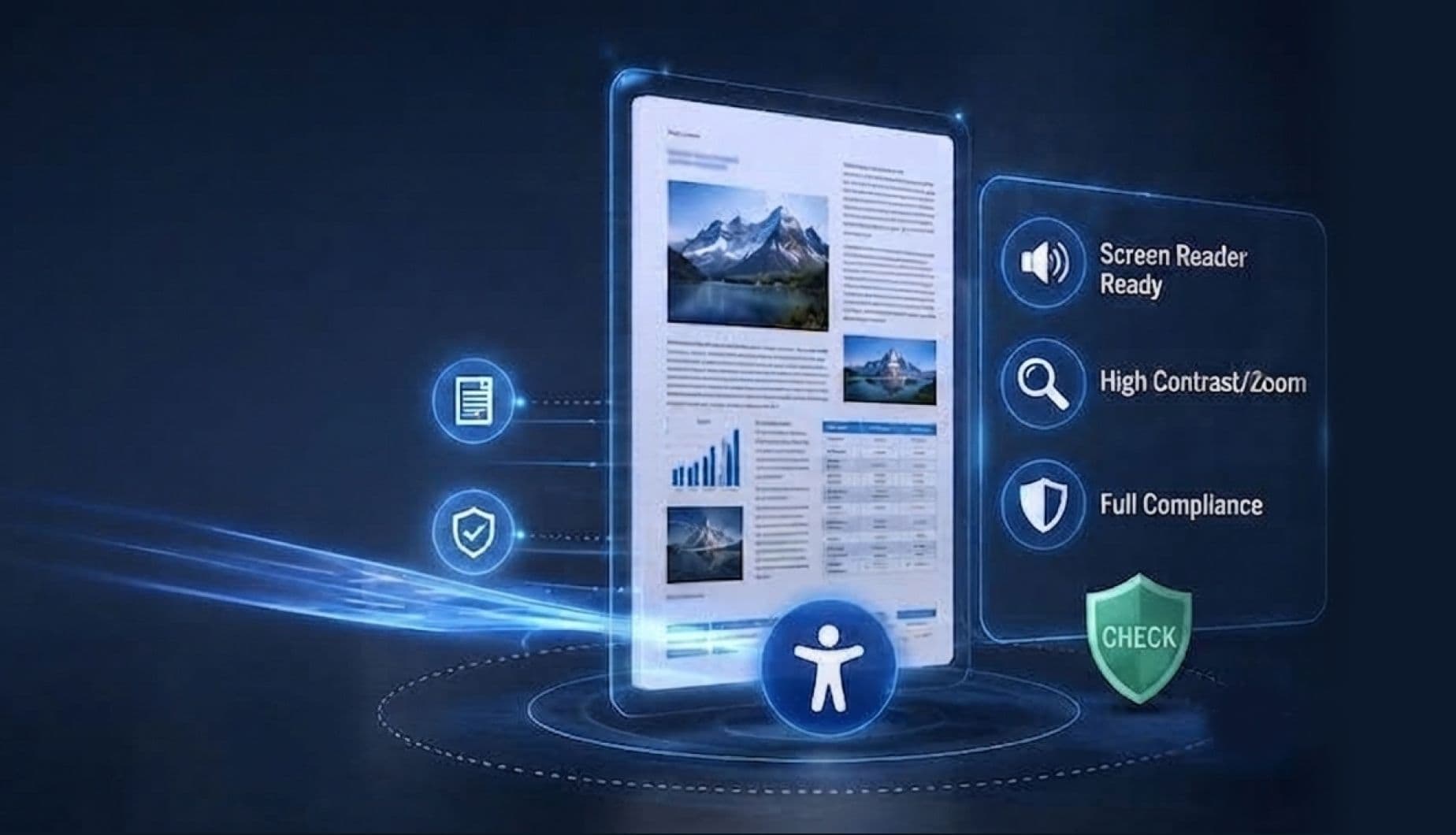
As the publisher distributed titles to audiences across multiple regions, our team had to maintain accessibility requirements consistently across a high volume of Fixed Layout eBooks. We needed to ensure each edition aligned with applicable standards, including ePub Accessibility 1.1 and WCAG 2.1 Level AA accessibility criteria for Fixed Layout ePub, without slowing the production schedule.
Academic Publishing Deadlines
School terms, new editions, and curriculum rollouts determined the publisher’s release schedules across regions. Production delays could therefore affect downstream publishing, distribution, and delivery schedules. This made predictable turnaround times as important as conversion accuracy.
Structured eBook Conversion Workflows Combining Human Expertise and Automation
We established separate production paths for Fixed Layout ePub3, Read Aloud titles, and Kindle editions rather than forcing all publications through one standardized conversion process. Automation handled repeatable preparation, formatting, and validation, while specialists reviewed content where subject matter, visual hierarchy, or accessibility requirements required human judgment. This hybrid workflow increased production throughput without removing the specialist intervention needed for complex educational content.
Built Specific Conversion Workflows for Every Format
We classified titles by destination format, content type, complexity, and accessibility requirements before production began. We configured dedicated workflows for Read Aloud titles, Fixed Layout eBooks, and Kindle/KF8 conversion. The workflow handled steps such as baseline formatting and preparation of files through automation, while sending complex pages to specialists for detailed review. For STEM-focused books, we reviewed MathML, SVGs, chemical structures, equations, and instructional diagrams individually to ensure the digital representation retained the source material’s meaning. The team also checked reading sequences where visual placement did not automatically produce an appropriate logical reading order in Fixed Layout eBooks.
Integrated Accessibility into ePub3 Production
We incorporated accessibility checks into the ePub3 conversion and formatting workflow, rather than treating them as a final-stage correction exercise. The team prepared and reviewed files against the client's applicable accessibility requirements. We addressed semantic structure, navigational elements, accessibility metadata, alternative text and descriptions, heading structures, and ARIA semantics where appropriate. We paid particular attention to common ePub fixed-layout accessibility challenges, including logical reading sequence and missing or inadequate image alt text in fixed-layout ePub files. This approach helped make accessibility considerations part of production decisions from the start of the conversion process.
Preserved Source Layout and Relationships
Our team evaluated design fidelity at page and element level. We verified the positioning of fonts, illustrations, tables, captions, callouts, sidebars, and instructional notes against the source design. We paid special attention to line breaks, hyphenation, page boundaries, multi-column content, and text-image relationships that could otherwise change during digital conversion. For content in publications with many references and textbooks, this step was particularly important because an apparently minor layout shift could separate a label from its illustration, a note from its corresponding passage, or an explanation from the relevant diagram. The resulting accessible Fixed Layout eBook design process balanced preservation of the print composition with the additional semantic requirements of digital delivery.
Applied Multi-Stage Technical and Accessibility Validation
We incorporated ePub validation tools Ace by DAISY, ePub Validator and Pagina ePub Checker into our review process to identify structural and accessibility issues. We supplemented automated findings with manual inspection to ensure reliable outcomes.
We checked for:
- Missing or incorrect alternative text
- Heading and semantic structure
- Reading sequence
- Accessibility metadata
- Asset and package integrity
- Layout rendering
- Navigation
- MathML and SVG presentation
We also assessed rendering and behavior across multiple devices and reading environments, including Apple Books, Kindle, Adobe Digital Editions, and Google Play Books. This combination of automated validation and specialist QA helped identify issues earlier in production and reduced avoidable corrections near delivery.
Dedicated Teams for Peak Publishing Cycles
We allocated a team of twelve specialists to handle eBook conversion, and four reviewers to control production quality. This operating model allowed us to adjust resources during high-volume academic publishing periods without changing the core conversion and quality analysis procedures. We defined production responsibilities, review checkpoints, and escalation paths for complex educational content, enabling our teams to process 7,000 to 10,000 pages monthly within scheduled delivery windows.
Project Outcomes
Produced 7,000 to 10,000 Pages Every Month
We maintained high-volume production across Fixed Layout ePub3, Read Aloud, and Kindle editions without disrupting scheduled releases.
Preserved 99% Layout Accuracy
We maintained STEM content, instructional elements, illustrations, tables, and complex layouts in line with the source design.
Optimized Production Turnaround by 40%
We accelerated delivery through standardized workflows, targeted automation, specialist review, and integrated quality assurance.


Scale Complex eBook Conversion without Compromising Publishing Quality
Start scaling eBook production across Fixed Layout ePub, ePub3, Read Aloud, Kindle, and other formats with our professional content transformation and digital publishing services. Share your volume, accessibility, and delivery requirements with our ePublishing specialists and build the right production workflow for your publishing schedule.